Notes

PLEASE CHECK OUT THE NEW "WHAT'S COOKING ON THE HOT STOVE" SECTION, ON THE LEFT HAND COLUMN.

Liar Liar

There are good liars out there but Roger Clemens is not one of them.

Judging by Clemens’s body movements and voice in his 60 Minutes interview with Mike Wallace, it has become clearly evident he is covering something up. Now we do not know if he used anabolic steroids, human growth hormones or any other performance enhancement drugs but we do know he used something.

First off, Wallace tried to ask Clemens the tough questions but the all-star pitcher danced around them like Laurence Maroney running up the middle. He took his time answering Wallace’s questions like he was looking in his brain for the right answer. When a person has to look for the “correct” response, there is a higher probability that he is leaving out an important part of the story.

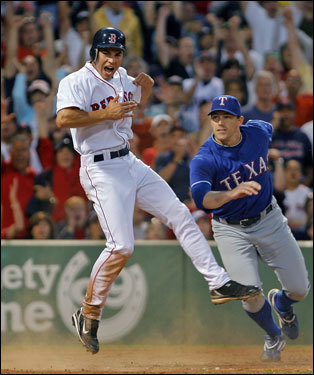
It is not always the case in certain circumstances. You have to take into the person’s speaking ability but this is not the case with Clemens. The man is a good public speaker so there was no reason to believe he has a speech problem. Johnny Damon has a speech problem. (If Damon was answering Wallace’s questions like Clemens, it would be almost expected because Damon has a type of speech impediment prohibiting him from getting things out clearly and quickly.)

When faced with what Clemens actually did take he answered “lidocaine and B-12” so quickly it made your head spin. Then make you say, how could this man answer that question that fast but the others so slow like the grandma driving on Storrow Drive at 5:45 in the afternoon? It made you think there was something fishy going on. And there is something going on underneath the surface.

Most professional athletes have taken lidocaine-type substances to relieve pain from injuries they received during a 162+ game season. It is no secret. You see players getting cortisone shots before and after games. Cortisone is a legal anti-inflammatory steroid used to relieve an athlete’s pain.

Later in the interview Wallace asks Clemens the question most of America wanted to hear about Clemens not talking with investigators when questioned. The reasoning Clemens gave was certainly a valid response. Lawyers will tell you not to talk to investigators if questioned. Investigators can not promise confidentiality and anything said in the interrogation is considered on-the-record. It can be considered in a court of law or by another governing body, such as Major League Baseball.

Following the instructions of his lawyers, Clemens was correct. But how much of what Clemens told his lawyers was correct? Now we all want to believe people would never lie to their lawyer based on lawyer-client confidentiality (similar to the doctor-patient confidentiality) but you just do not know what people will say. Clemens might not have been fully honest with his lawyers but we will never know. Even if Clemens does testify we will not know because of the code, unless his lawyers come out and break the code.

We will just have to wait to find out what happens with his defamation lawsuit against his former trainer Brian McNamee. Court cases are public domain and unless Clemens perjurers himself we will have the answers because Wallace’s interview with Clemens told us nothing except that Clemens is a horrible liar.

Theo Epstein

Growing up in the shadows of Fenway Park in Brookline, Massachusetts, Theo Epstein got the chance all Red Sox fans dream about in 2002 when he became the General Manager.

A Ivy League graduate with a juris doctorate from the University of San Diego while he was with the San Diego Padres. Epstein worked his way up through the ranks from public relations to director of baseball operations to an assistant to the General Manager with the San Diego ball club.

When the Boston Red Sox were bought from John Harrington by John W. Henry and Tom Werner, former Padres President Larry Lucchino brought young Theo back to Boston. In the fall of 2002, he replaced Mike Port as the General Manager, making him the, then, youngest G.M. in baseball.

Throughout the years Epstein has made some good deals, some bad deals and some ugly deals. But still was able to bring the first championship back to Boston for the first time in 86 years as well as making the Red Sox the first team in the 21st Century to win two championships (2004 and 2007).

Epstein made good on his promise to re-vamp the farm system by evaluating and drafting young, amateur players such as Jonathan Papelbon (2003), Dustin Pedroia (2004) and Jacoby Ellsbury (2005). These players have climbed up the ladder of the Red Sox minor league system and produced for the big league club. In this regards, Epstein has been far above average.

But in other aspects of baseball operations, Epstein is below average when it comes to evaluating ready major league talent. Acquiring David Ortiz over the waiver wires from the Minnesota Twins was a steal and good pick up, he deserves a plus for this acquisition but that same year he acquired Kevin Millar, Bill Mueller and Jeremy Giambi. Although Millar was good clubhouse character he was sub-par in the field and Mueller had one outstanding year in 2003 but dropped the following years. And who can forget the Giambi signing? He turned out to be a bust and opened the door for both Millar and Ortiz to get more playing time.

Let’s turn to 2004 after the World Series and the signing of Edgar Renteria to a $11 million a year contract for four years. In 2005, Renteria ended the year with a .276 batting average (15 points below his career average), 172 base hits, only 60 runs batted in, 100 strikeouts and only 55 walks. Not good statistics for your number two hitter. The Red Sox are still paying ($11 million) for that mess after dealing him to Atlanta for a minor league prospect, Andy Marte.

Speaking of Andy Marte, the guy we traded to Cleveland to acquire Coco Crisp. Another player, who like Renteria, was not capable of playing in the Boston market. Most fans of the ball club will tell you to give Crisp a break for his poor 2006 season because of a broken finger but 2007 was all that much better. In 145 games, Crisp hit .268 with 141 hits (28 doubles, seven triples and six homeruns) and 60 runs batted in while recording 50 walks and 84 strikeouts.

I know you are thinking, but what about Josh Beckett, Curt Schilling, Daisuke Matsuzaka, Hideki Okajima and Mike Lowell? I will give you Beckett, Schilling and Matsuzaka but Okajima was never supposed to be as good as he was in 2007 and Lowell was a throw in, in the Beckett deal. People thought Lowell was on the back nine of his career and the part of the deal that was stopping a lot of teams from acquiring Beckett. Other teams did not want to take on Lowell’s $9 million salary after 2005. With Okajima and Lowell, Epstein just got extremely lucky. He had no idea they would be as good as they were the past year.

In conclusion, Theo Epstein is a proactive General Manager. He is your typical active-positive. He is bold in his moves by taking on contracts like Lowell and Renteria but unlike the active-negative, Epstein acknowledges when his plans have failed and he moves forward accordingly. Your typical active-positive are not immune to failure but they know how to accept their failures and turn them into successes by not making the same mistake twice. Hence why Epstein is an active-positive. He rarely makes the same mistake twice.

2007: A Review in Sports

2007 for sports in America can be simplified down to: the good, the bad and the ugly. Read below for an overview of the year.

Major League Baseball

THE GOOD: The Boston Red Sox winning their second World Series Championship in four years and becoming the first and only team to win it twice in the 21st Century. As well as Sox pitcher Jon Lester coming back from a cancer diagnosis in late 2006 to win the clinching game of the World Series.

THE BAD: The Mitchell Report by Senator George J. Mitchell being released in mid-December, naming 86 current and former MLB players including former Red Sox Roger Clemens and Mo Vaughn. It really gives baseball a black-eye.

THE UGLY: Roger Clemens’s denial of steroid usage and Jose Canseco’s coming out with a new book in the Spring of 2008.

National Football League

THE GOOD: The New England Patriots becoming the first team to finish the regular season 16-0 and have the best chance of going 19-0 and winning their fourth Lombardi Trophy. As well as Tom Brady breaking Peyton Manning’s touchdown record and Randy Moss breaking Jerry Rice’s touchdown reception record.

THE BAD: Former Atlanta Falcons’s Quarterback Michael Vick being charged and arrested for dog fighting in April. Upon the guilty verdict, Vick now is spending 23 months in a Virginia penitentiary.

THE UGLY: New York Jets Head Coach Eric Mangini blowing the whistle on his former mentor Bill Belichick after the Patritos-Jets game at Giants Stadium at the beginning of September. It resulted with the Patriots being stripped of their first round draft pick and getting in the wallets of Belichick and the Patriots franchise for a combined $750,000.

Also the Miami Dolphins winning their first game of the season against the Baltimore Ravens in December and ended the season with a 1-15 record.

National Basketball Association

THE GOOD: After winning only 24 games all of last year and losing 19 games in a row at one point, the Boston Celtics are the hottest team in the NBA right now. Trading their fifth overall pick to the Seattle Supersonics for Ray Allen then making a blockbuster deal to acquire Kevin Garnett in July, the Celtics find themselves a top the league at 26-3.

THE BAD: The gambling scandal of NBA official Tim Donaghy for betting on basketball games that he officiated during the previous two seasons. Donaghy pleaded guilty to federal felony conspiracy charges.

THE UGLY: The Miami Heat being 8-23 so far this season when only a couple years ago they were World Champions. Also you have to take into account Minnesota without Kevin Garnett – and with half of ex-Boston players (Al Jefferson, Sebastian Telfair, Ryan Gomes, Theo Ratliff, Gerald Green, Antoine Walker, Randy Foye and former BC Eagle Craig Smith) sits at 4-25.


College Football:

THE GOOD: Appalachian State beating Michigan in the first week of the college football season as well as Boston College as one of the surprise teams of the year, ending the season with an 11-3 record and 6-2 in the ACC.

THE BAD: The fact that we have two teams with two losses in the season playing for the National Championship. What about West Virginia or Hawaii?

THE UGLY: The historic powerhouse the Notre Dame Fighting Irish getting their second win of the season against Duke on November 17. They finished the season with a 3-9 record and many wondering if this will be Charlie Weis’s last year.

If you noticed that “the good” all have ties to Boston, well this was Boston’s year in the sporting world. And it looks like, with the direction the Red Sox, Patriots, Celtics, Revolution and even Bruins are heading, it won’t be their last year on top.

Here are some high and low points of the past year in sports:

  • January 12 – McDaniel College Head Basketball Coach Bob Flynn passing away at the age of 49 after a sudden, massive heart attack.
  • February 4 – Peyton Manning finally gets his ring when the Indianapolis Colts defeat the Chicago Bears two weeks after coming back from a 21-6 deficit against the Patriots.
  • The Florida Gators defeating the Ohio State Buckeyes for both the NCAA Division I-A Football Championship and the NCAA Division I Basketball Championship.
  • Barry Bonds breaks Hank Aaron’s homerun record in August then is indicted by the federal grand jury months later.
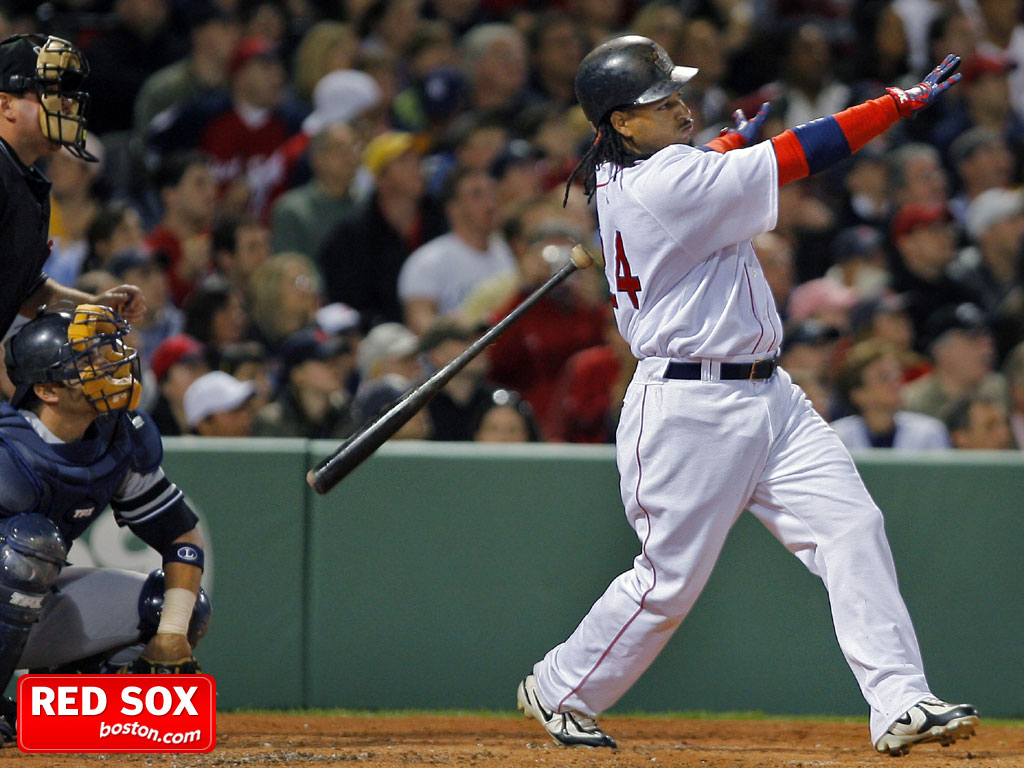
  • Red Sox outfielder J.D. Drew becoming the only major league player to be a part of two back-to-back-to-back-to-back homeruns, when the Sox Manny Ramirez, Drew, Mike Lowell and Jason Varitek all went deep against New York Yankees starter Chase Wright on April 20. (Drew was a part of one as a Dodger the previous year.)
  • The American League winning another All-Star game.
  • The first player to get a hit off of Daisuke Matsuzaka was college outfielder and punter, Johnny Ayers.
  • Patriots offensive line man Marquise Hill dying in a jet-ski accident in Louisiana in July.
  • Bills tight end Kevin Everett being temporarily paralyzed after trying to make a tackle on, then, Broncos kick returner Dominik Hixon. Thanks to the knowledge of the Buffalo medical staff, Everett is able to stand and walk on his own four months after being injured.
  • Redskins safety Sean Taylor dying from a gunshot wound to the leg after catching someone trying break into his house.
  • Broncos defensive back Darrent Williams being shot and killed less than 24 hours after the Broncos’s season ended on Denver streets at 2 o’clock in the morning on New Year’s Day 2007.
  • Zach Johnson winning his first Masters Championship on April 8.
  • Don Imus’s racial comments about the Rutgers women’s basketball team in April.
  • The Virginia Tech Hokies winning the ACC Championship after the a single gunman took the lives of 32 students and faculty.
  • San Antonio Spurs sweep the Cleveland Cavaliers in the NBA Finals.
  • Roger Federer wins his fifth consecutive Wimbledon title.
  • Tiger Woods wins his 13th major winning the PGA Championship.
  • Phil Mickelson wins the 2007 AT&T Pebble Beach Pro-Am for the third time and his second in three years.
  • Mickelson injures left wrist while playing in a practice round at the U.S. Open at Oakmont due to the heavy rough.
  • Angel Cabrera becomes the fourth consecutive non-U.S. born golfer to win the U.S. Open. (Retief Goosen, South Africa, 2004; Michael Campbell, New Zealand, 2005; Geoff Ogilvy, Australia, 2006)
  • Irish golfer Padraig Harrington wins the 2007 Open Championship (British Open) at Carnoustie Golf Links.

"It sounds like a Personal Problem"

Jose Canseco’s second book should be released just in time for Opening Day 2008 and, according to ESPN; the sequel is going to mention more names than the first. The New York Post and the New York Daily News gave some details about what might be included in his second book.

Allegedly, Canseco has defaming information on Alex Rodriguez, Ivan Rodriguez and Juan Gonzalez regarding steroid usage as well as information regarding Mark McGwire in the 2005 Congressional hearings. Canseco adds that this book will “fill-in” the holes that the Mitchell Report opened and how he was shocked that A-Rod’s name was not mentioned in the Report.

If you never read Canseco’s first book “Juiced,” I would advise you not to read the sequel. By virtue of writing a second book it has become evident that Canseco has absolutely no interest in cleaning up the game of baseball. All he is doing is defaming the league for his own personal downfall. This is not a baseball problem and in the words of Dr. Charles Neal “it sounds like a personal problem.”

To all baseball fans out there here’s a warning: do not waste your hard earned money on Canseco’s second book of crap. It is assured to add nothing but speculation with more players.

Both books have been Canseco’s way of getting back at Major League Baseball for the way his career ended. No one can argue that Canseco had a less than perfect end to his career. After playing seven seasons with the Oakland Athletics, he spent the last years of his career with Texas, Boston, New York, Chicago, Tampa Bay and Toronto.

In his 17 year career, Canseco was a two-tool player – a base stealer and a power hitter – and overall good baseball player. For seven seasons he was had double digits in stolen bases and homeruns while becoming only one of four players to hit 40 homeruns and have 40 stolen bases in a season. Those are the quintessential skills that start to diminish around the age of 31/32 years old and in his case he became a one-tool player after 1994, with the exception of one year (1998). When his skills started to go, he had nothing. Canseco was a defensive liability in the field, hence why he spent his entire career in the American League. (Remember the time he was playing rightfield and a fly ball bounced off his head and over the fence for a homerun? My point exactly.)

His books mean nothing but a bunch of sour grapes that his career ended struggling to make the rosters of the Devil Rays and Expos. These books are for the sole purpose of saying “if I’m going down then I’m bringing the entire league down with me.” That is sad and I think we are witnessing a man in total “emotional turmoil.”

Athletes contemplate but choose wisely

This is an article that I wrote during my sophomore year at McDaniel College about collegiate athletes (mainly at McDaniel) and performance enhancement drugs. I talked to wrestlers, football, lacrosse and baseball players. This is what I found out from talking with these Division III student athletes.

At one point in time steroids came to the mind of all college athletes for the extra strength that they need so they can compete with that other linebacker, quarterback, pitcher or outfielder. McDaniel coaches, trainers, athletic director and Terror athletes are on different sides of the fence on the issue of steroid use in Division 3 and at McDaniel.

Green Terror athletes spend a lot of time in the weight room lifting weights and working hard to compete for roster spots and starting positions. Athletes can spend so much time in the weight room but there is only so much that they can do. By their competitive nature, athletes will try to gain an advantage over their teammates for playing time anyway possible.

“There comes a time when you can’t do anything more,” says sophomore defensive back Matt Lufkin. “There comes a time when you can’t lift any harder or do anymore.”

It is always tough to see that guy come into the weight room, spend an hour there, leave and still get playing time over the guy who was “the first one in and last one out.” No athlete wants to see that. So they look for a way to gain an advantage.

They are always competing with someone, no matter if it is during a game or during practice. They want playing time.

“No one likes to work hard and not get a chance to show it,” says senior wrestler Leon Checca.

Athletes will look for the easiest way to gain strength, become stronger or faster. That way usually leads to steroid abuse. With steroids athletes can lift harder and longer. Steroids have testosterone that allows athletes to work out for a longer period of time and cuts down on the recovery time of the athlete.

“[Steroids] decreases the recovery time,” explains McDaniel Athletic Trainer Gregg Nibbelink. “They will lift too much and never let the body heal.”

But the negative affects of steroids do not have any affect on athletes. They are thinking of the present and the near future.

“They want that $100 million contract,” says junior linebacker Jay Scott.

Neither Scott nor Checca has ever considered using steroids. Steroids are the easiest way to get bigger and stronger. They are the worst thing to ever happen to sports in this society. To put it simply steroids are the easiest way to cheat.

“They are an inevitable part of the game,” says Lufkin.

Athletes want to play. They want to show that they can play. They have worked so hard. Some coaches at McDaniel recognize that athletes my try or consider steroids for a roster spot. But other coaches such as the men’s lacrosse Head Coach, Jim Townsend, think just the opposite.

“If they have to compete for a roster spot then they have issues other than steroids,” says Coach Townsend.

Coach Townsend and football Head Coach Tim Keating do not believe that there are athletes at McDaniel who are using steroids. And they are right. There has been no evidence that suggested a Terror athlete had been using any type of performance enhancing drug, according to Athletic Director Jamie Smith.

“I haven’t seen athletes at McDaniel about steroids, so I can’t prove it’s being done [here] or not being done [here],” explained Nibbelink.

But Nibbelink is not saying that there definitely are no Terror athletes on steroids. It is possible that athletes can do steroids because the NCAA drug testing policy is not the same in division three as it is in divisions one and two. This has sparked the idea of having more stringent and random testing in division three.

Division one and two athletes have random drug testing but division three athletes are only tested if they make the playoffs. So it is possible for a division three athlete to be using a performance enhancing drug during the season. The only thing that athlete has to keep in mind is: what if the team makes the playoffs?

“If a player thinks they will go to the playoffs or nationals they won’t do it,” says Nibbelink.

Nibbelink, as well as Keating, is for random drug testing. Athletes will less likely to use any performance enhancing drugs if they know that they can be tested at anytime, according to Nibbelink. He also thinks that the NCAA should pay for the testing if they really want to drug free the college athletics.

“McDaniel can’t avoid to do random drug tests,” says Nibbelink. Drug testing can cost a school up to $1 million per year.

But not everyone is for random testing. Checca is one who is against. It is not the answer to the steroid problem in division three. Testing doesn’t prove anything, according to him. As long as they get off the drug a few months before they have the idea they are going to be tested the drugs will be out of their system.

Division three athletes are different than division one and two athletes. Division one and two athletes are playing mostly for the chance to go to the next level (the professional level), says quarterback and lacrosse player Brad Baer.

“D3 athletes are playing more for the love of the game,” says Checca.

Steroids do not make the athlete. The athlete has to already have some skill and talent level before he/she steps onto the field. The steroids are not going to do it for them. Athletes have to be willing to work and put in time in the weight room, says outfielder and quarterback Tom Weinrich. They have to be willing to be “one of the first ones in and one of the last ones to leave.”

“You can take all the steroids you want but if you don’t lift nothing’s going to happen,” claims Coach Townsend.

No more Fleece...

Doesn't MLB have more important issues to deal with than making sure Terry Francona is wearing his jersey? There is the whole steroid issue that comes to mind as being more egregious than Francona's fleece sweatshirt.

If MLB wants to crack down on the uniforms than crack down on the personnel that are actually ON field. Looking at the 30 different teams in baseball the majority of the players wear their pants down over their shoes. There are not too many players left that show the socks. Jonathan Papelbon, Manny Ramirez and David Ortiz all wear uniforms that somebody just let the air out of. Call me old school but I liked it when the uniforms actually fit the players. I would like to see a little more nostalgia in the league or more of MLB players like Josh Beckett. He actually looks professional. Remember 90% of life is presentation.


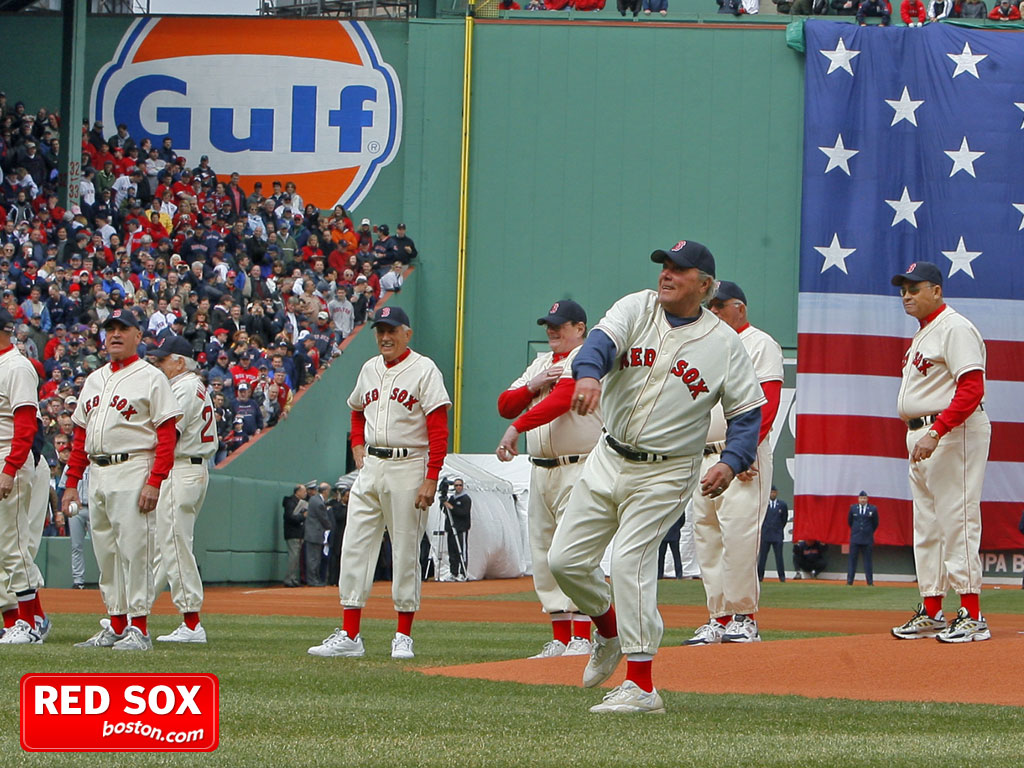
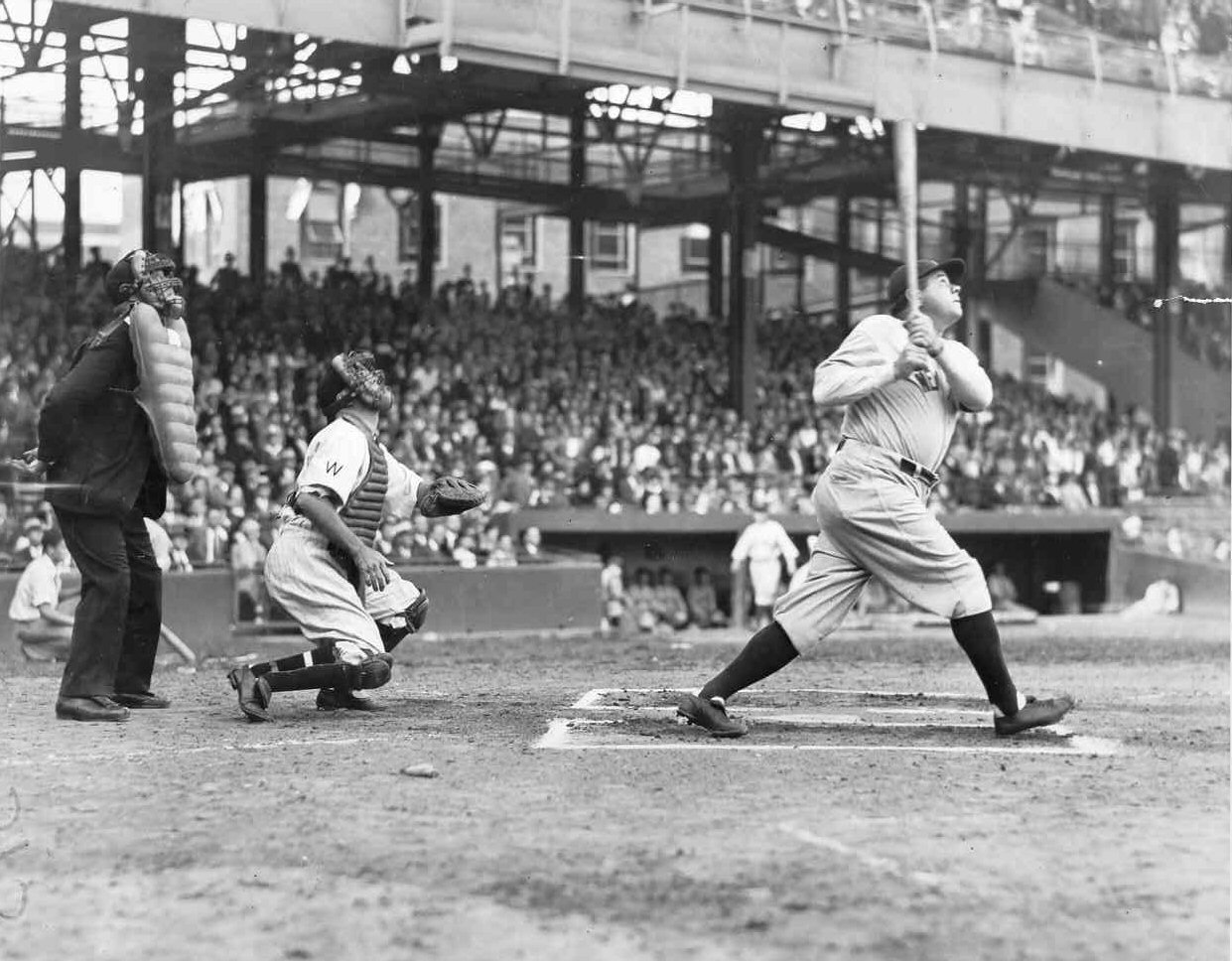
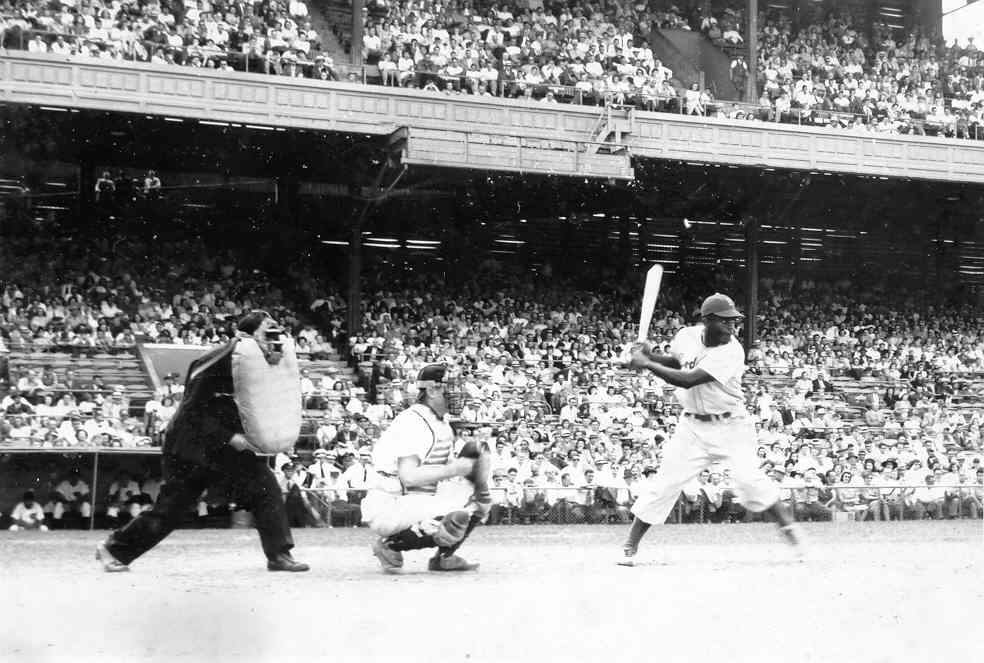
Then their are the players like Jason Varitek and Mike Timlin who from time to time like to wear the high socks. I do not have a problem with this style compared to the overly baggy style because it is nostalgic. It traces back to the days of Babe Ruth and Jackie Robinson.

How about a standard uniform like NFL? All players and teams will have to designate their uniforms during the first three weeks of Spring Training, where ALL players must wear the same style. There is a reason it is called a uniform for a reason. All players must be uniform (no player may wear their pants long when the rest of the team is wearing their pants high and vice-versa). During the course of the season the teams and players must where their designated uniforms for their home or road games. If during the season, a player violates MLB uniform policy, both the player AND the team are fined an indefinite amount of money.

Idealist fans with Neo-Realist Philosophies

The fans out there who say that the Sox should not trade Jacoby Ellsbury, even if it means getting one of the best pitchers in Major League Baseball and a 2-time Cy Young Award winner, are idealist in nature. They see, at sometime in the near future, all the Sox prospects playing on the same field together. This is not the case.

The Red Sox want to be a competitive team year in and year out and the only way to do so is to build up a farm system of good, young players. These players can be used on the field or as a trade bait to get the Pedro Martinez's, Josh Beckett's and Johan Santana's of the league.

Having a good farm system is a double edged sword for the Sox, having the prospects they have leave trades difficult to make. Other teams, such as the Twins, also know how good the Sox system and will up the price for their veteran talent (i.e. the Twins wanting Jacoby Ellsbury, Jon Lester, etc. for Johan Santana). It is what Sox fans have to deal with. Not all prospects will wind up in a Sox uniform.

The majority of realistic Red Sox fans understand the benefits of a good farm system give you a leg up in being competitive every year by being able to acquire the present day top players. These fans would trade Ellsbury and his future potential for Santana. Acquiring Santana will put the Red Sox in the same position of MLB in 2008, that the Patriots are in during this year's NFL season. That position being: dominating the rest of the league and possibly another championship.